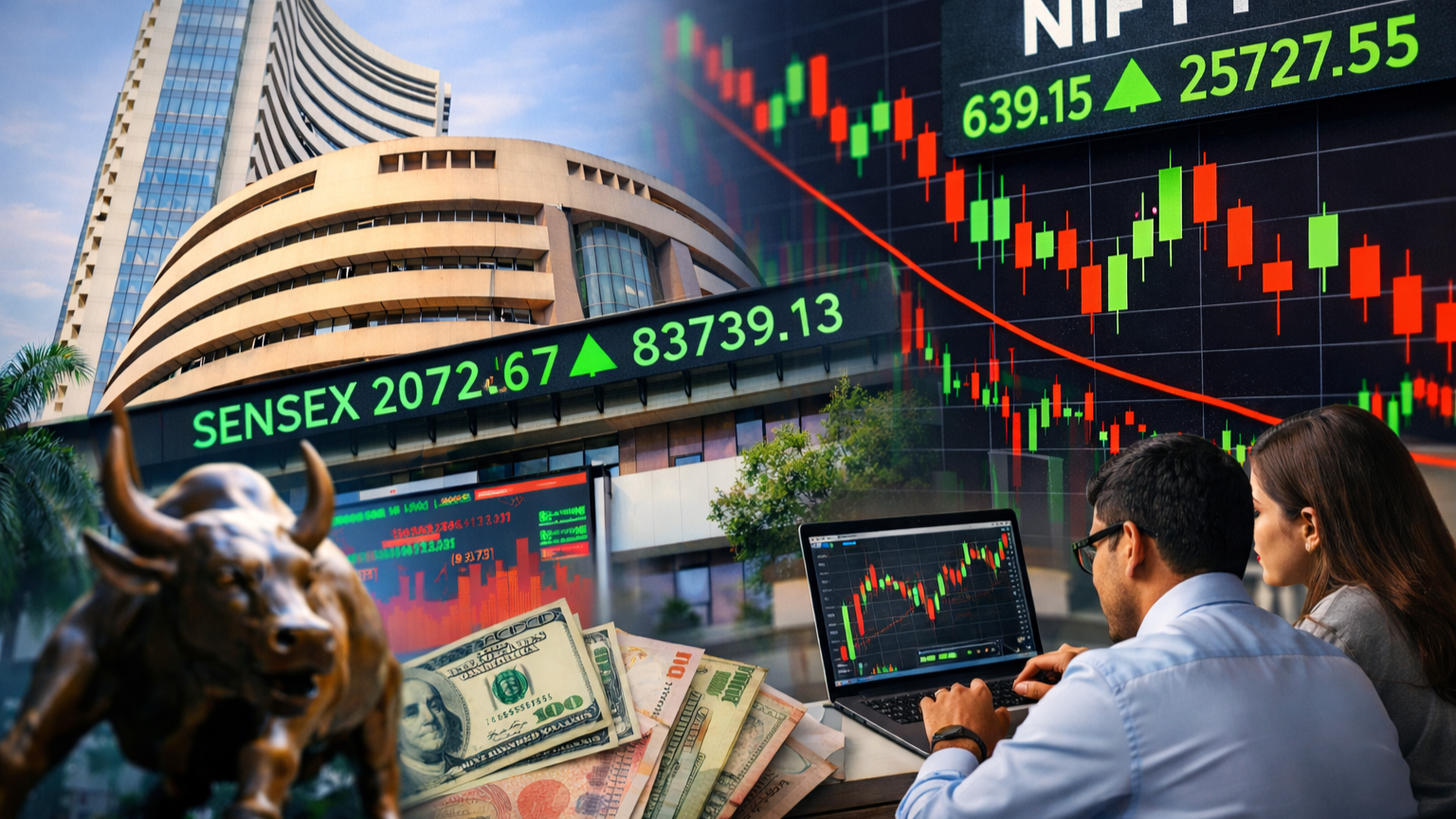
Sensex and Nifty opened higher after a strong rally, however sharp selling in IT stocks slowed momentum and kept the Indian stock market range-bound.
The Indian stock market stepped into Wednesday’s session with confidence. After all, Tuesday had delivered one of the strongest rallies in recent weeks. However, although benchmarks opened in green, the excitement gradually faded. As IT stocks slipped, the broader market lost speed, and investors quickly turned cautious.
Therefore, despite positive global cues and fresh foreign inflows, the day evolved into a mixed trading session rather than a one-sided rally.
Sensex Nifty Opening Trend and Early Gains
At the opening bell, the 30-share BSE Sensex climbed 68.49 points to 83,816.96. Meanwhile, the NSE Nifty added 51.90 points and touched 25,779.45. Initially, traders expected the previous day’s momentum to continue. However, as profit booking increased, the indices struggled to hold strong gains.
Additionally, the Indian rupee weakened by 22 paise against the US dollar. Consequently, currency pressure also limited aggressive buying in equities.
IT Sector Dragged the Market Lower
Although several sectors showed resilience, the IT pack clearly weighed on sentiment. As global tech stocks corrected overnight, Indian IT majors mirrored the weakness. Therefore, heavyweights like Infosys, TCS, HCL Tech, and Tech Mahindra slipped sharply.
Moreover, some of these counters declined up to 5 percent during early trade. As a result, the BSE IT Index dropped nearly 4.95 percent to 35,311.34, making it the worst-performing sector of the day.
Because IT companies carry significant weight in both Sensex and Nifty, their decline directly capped the broader market’s upside.
Top Gainers and Losers Among Sensex Stocks
However, the session wasn’t entirely negative. While technology stocks struggled, several defensive and infrastructure-linked counters offered support. Therefore, selective buying kept the indices from falling sharply.
| During the session, buying interest remained strong in select heavyweight stocks, which helped the market stay resilient despite sectoral pressure. Leading the gains were Mahindra & Mahindra, Power Grid, Reliance Industries, NTPC, ICICI Bank, and ITC, as investors showed confidence in auto, energy, power, and banking sectors. Meanwhile, on the other hand, technology stocks faced significant selling pressure. Infosys, TCS, HCL Tech, and Tech Mahindra emerged as the top losers, as weakness in the IT sector dragged sentiment and limited the overall upside of the indices. |
|---|
India US Trade Deal Boosted Investor Sentiment
One of the biggest triggers behind this week’s rally remains the India–US trade agreement. Under this framework, the US will reduce tariffs on Indian goods from 50 percent to 18 percent. Therefore, export-oriented sectors expect meaningful relief.
Previously, higher tariffs had affected Indian shipments to the US market. However, with duties likely to drop, industries such as textiles, pharmaceuticals, automobiles, and manufacturing may benefit significantly. Consequently, long-term investors see this agreement as structurally positive for India’s growth story.
FII and DII Buying Supported the Market
Liquidity trends also supported the market. Foreign Institutional Investors bought shares worth ₹5,236.28 crore on Tuesday. Meanwhile, Domestic Institutional Investors purchased ₹1,014.24 crore.
Because consistent institutional buying reflects confidence, the market avoided sharp declines. In addition, strong flows usually signal stability, which encourages retail participation as well.
Global Markets and Crude Oil Influence
On the global front, Asian markets delivered mixed signals. South Korea’s Kospi traded higher. However, Japan’s Nikkei 225, Shanghai’s SSE Composite, and Hong Kong’s Hang Seng slipped. Therefore, overseas cues remained neutral rather than strongly positive.
Meanwhile, Brent crude rose 0.68 percent to $67.77 per barrel. Higher oil prices typically increase India’s import bill. Consequently, inflation and currency pressures could rise, which may impact equities in the short term.
Previous Day Performance Snapshot
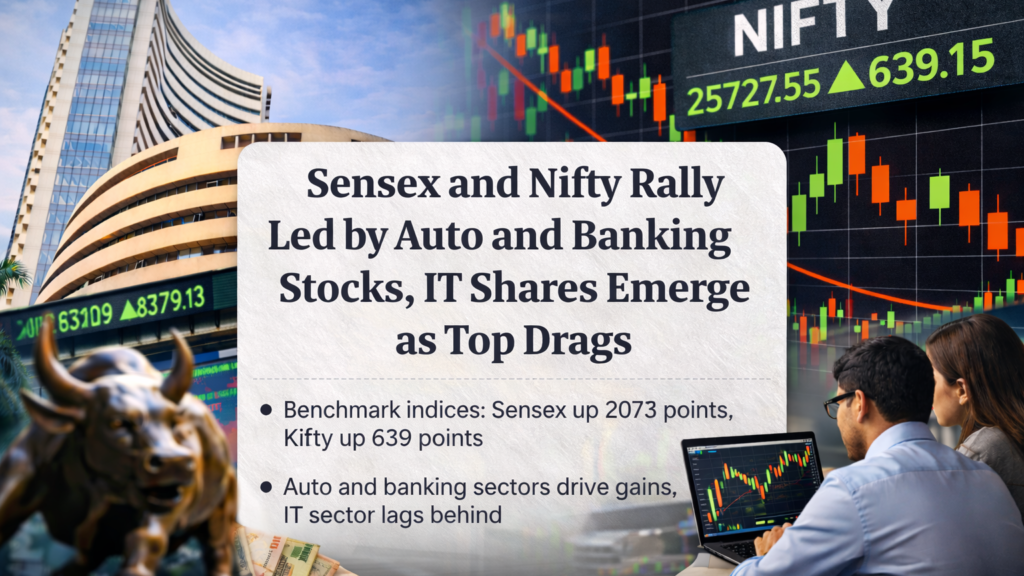
| On the previous trading session, the Indian stock market closed with strong gains across both benchmark indices. The BSE Sensex jumped 2,072.67 points, registering a sharp rise of 2.54 percent to settle at 83,739.13. Meanwhile, the NSE Nifty also moved higher, climbing 639.15 points or 2.55 percent to close at 25,727.55. This broad-based rally reflected strong investor confidence, supported by positive global cues, foreign institutional buying, and improving market sentiment. |
|---|
Expert View and Investment Strategy
Market experts suggest a balanced approach. Although the trade deal and foreign inflows create optimism, short-term volatility may continue, especially in IT stocks. Therefore, traders should avoid aggressive positions in weak sectors.
However, investors can gradually accumulate quality stocks in banking, power, infrastructure, and energy. Additionally, long-term portfolios should focus on fundamentally strong companies rather than chasing momentum.
Ultimately, disciplined investing and sector rotation can help navigate current fluctuations effectively.
Conclusion
Overall, the market started strong but lost steam due to IT selling. However, supportive trade policies and institutional buying kept the downside limited. Meanwhile, global cues remained mixed, which encouraged caution. Therefore, while the broader trend still looks positive, selective stock picking remains crucial. Consequently, investors who stay patient and diversified may benefit the most in the coming weeks.
FAQ
Why did the stock market slow down despite opening higher?
Although the market opened in the green, heavy selling in IT stocks reduced momentum and limited overall gains.
Which sector dragged the market the most?
The IT sector underperformed the most, as stocks like Infosys, TCS, HCL Tech, and Tech Mahindra fell sharply.
Read Also – February 2026 Bank Changes: SBI, HDFC, ICICI & PNB New Rules Explained
How does the India–US trade deal benefit the market?
Lower US tariffs on Indian goods may boost exports, improve company earnings, and attract more foreign investment over time.
What role did foreign investors play in the rally?
Foreign Institutional Investors bought more than ₹5,200 crore worth of shares, which supported liquidity and helped stabilize the market.
What strategy should investors follow now?
Investors should stay selective, focus on strong sectors like banking, power, and infrastructure, and remain cautious with IT stocks in the short term.
1 thought on “Sensex and Nifty Rally Led by Auto and Banking Stocks, IT Shares Emerge as Top Drags”