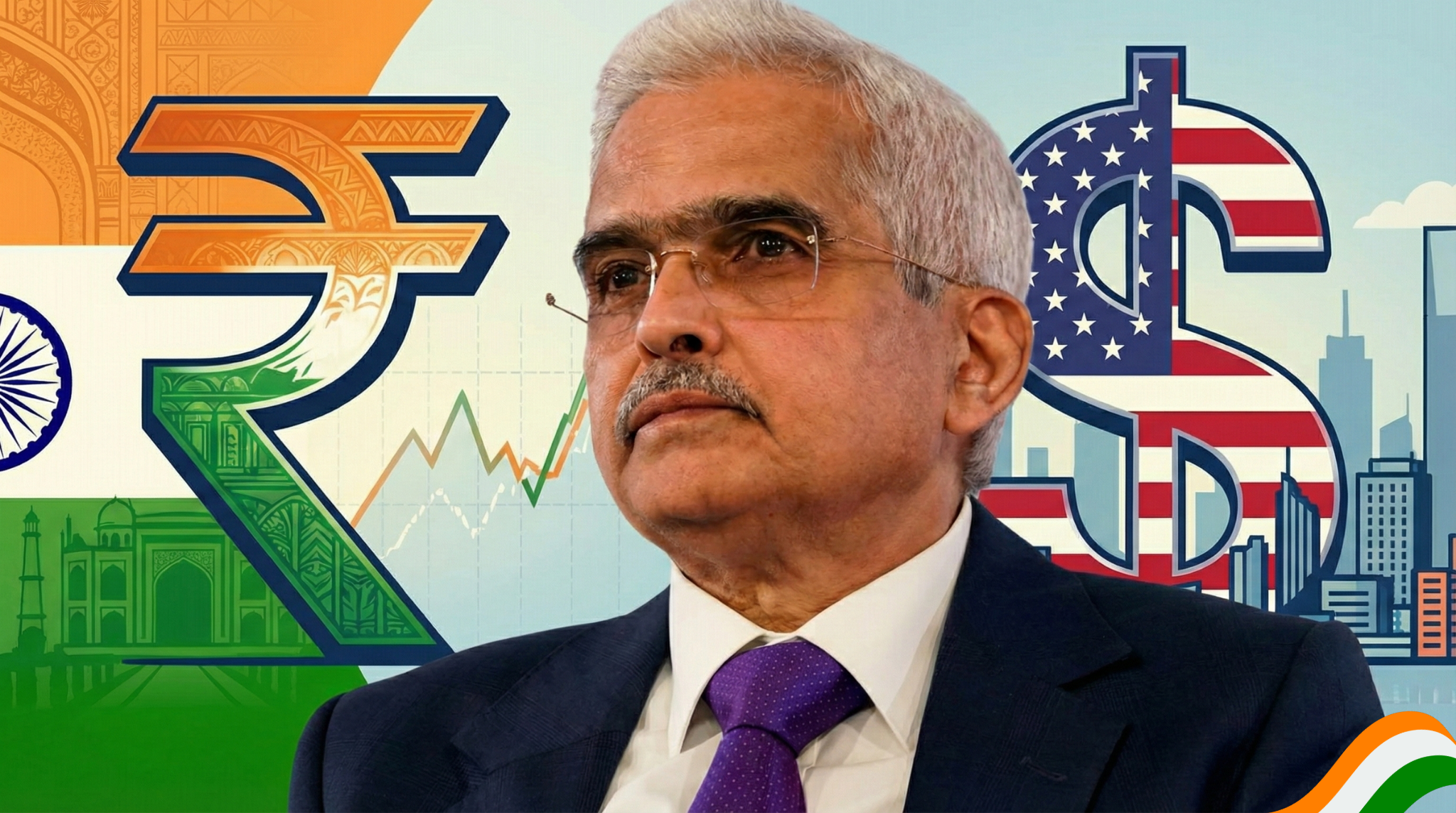
Currency value, rupee vs dollar exchange rate, and RBI intervention — ever wondered who really controls global money power? Here’s a simple, clear breakdown anyone can understand.
Every time the news says the rupee falls against the dollar or the dollar becomes stronger, most people assume the government or the central bank must be fixing the price. However, the reality works very differently. In fact, no single authority controls currency value. Instead, market demand, economic strength, global trade, and central bank actions together shape exchange rates every day.
As someone who tracks financial markets and economic policies closely, I can confidently say that currency pricing works just like any other marketplace. Therefore, when demand rises, value rises. Meanwhile, when supply increases or confidence drops, prices fall. Let’s break this down in simple, practical language so you can easily understand how the rupee, dollar, and other currencies move.
What Is Currency Value and Exchange Rate?
Currency value simply shows how much one currency is worth compared to another. For example, if 1 US Dollar equals 83 Indian Rupees, that number represents the exchange rate. However, this rate never stays fixed because global trading happens every second.
If the rate moves to 86, the rupee weakens. Conversely, if it drops to 80, the rupee strengthens. Therefore, exchange rates constantly fluctuate based on real-time buying and selling across international markets.
How Demand and Supply Decide Currency Value

First and foremost, demand and supply play the biggest role. Just like gold, oil, or stocks, currencies also trade in open markets. Consequently, higher demand increases value, while lower demand reduces it.
For instance, if foreign investors want to invest in India, they must convert dollars into rupees. As a result, rupee demand rises and its value strengthens. On the other hand, when India imports more goods, companies need dollars to pay foreign suppliers. Therefore, dollar demand rises and the rupee weakens.
So clearly, the market — not any single institution — drives daily price movements.
Major Economic Factors That Influence Exchange Rates
Besides demand and supply, several economic indicators strongly affect currency strength. Moreover, investors closely monitor these factors before moving money between countries.
| Factor | Impact on Currency |
|---|---|
| Exports | Higher exports strengthen currency |
| Imports | Higher imports weaken currency |
| Inflation | High inflation reduces value |
| Interest Rates | Higher rates attract foreign investors |
| Political Stability | Stable nations build investor trust |
| Forex Reserves | Large reserves provide protection |
Therefore, countries with strong economies, controlled inflation, and steady growth usually maintain stronger currencies over time.
Why the US Dollar Dominates Global Trade
Meanwhile, the US dollar remains the most powerful currency in the world. However, this dominance didn’t happen by accident. Instead, decades of economic stability and global trust built its position.
Additionally, most international trade — especially oil, gold, and commodities — happens in dollars. Moreover, central banks store large portions of their reserves in USD. Consequently, demand for the dollar stays high across the globe.
Because of this constant demand, the dollar often strengthens even during global uncertainty. Therefore, many experts call it the world’s “reserve currency.”
Role of Central Banks in Currency Control
Now here’s a common myth — many people believe central banks directly set exchange rates. However, that’s not true. Instead, they influence currency value indirectly.
Central banks control interest rates, manage inflation, and regulate money supply. Additionally, they buy or sell foreign currencies to reduce extreme volatility. Consequently, they stabilize the market rather than fix prices.
So while they don’t control daily rates, they definitely shape long-term trends.
RBI and India’s Managed Float System
India follows what experts call a managed float exchange rate system. In this model, the market decides the rupee’s price naturally. However, the Reserve Bank of India steps in during sharp fluctuations.
For example, if the rupee suddenly crashes, RBI sells dollars to increase supply and stabilize prices. Meanwhile, if the rupee becomes too strong, RBI buys dollars to protect exporters. Therefore, this balanced approach prevents extreme swings and protects the economy.
As a result, India enjoys both flexibility and stability.
How Currency Value Impacts Daily Life
Exchange rates don’t just affect traders or economists. Instead, they directly influence your daily expenses.
When the rupee weakens, petrol prices rise because India imports crude oil. Additionally, electronics and smartphones become expensive. Moreover, foreign travel and education cost more. Consequently, household budgets feel pressure.
However, when the rupee strengthens, imports become cheaper. Therefore, fuel costs drop and foreign goods become affordable. In addition, inflation reduces, which benefits consumers.
Who Holds the Real Power Over Currency?
So finally, who controls currency value? The honest answer is — everyone and no one at the same time. Markets, investors, governments, trade flows, and central banks all influence exchange rates together. Consequently, no single person or institution holds complete control.
Therefore, currency strength ultimately reflects a country’s economic health, investor confidence, and global demand.
FAQ
1. Who decides the value of a currency?
The forex market decides currency value through demand and supply, global trade, investments, and overall economic performance.
2. Does RBI fix the rupee exchange rate?
No, RBI does not fix the rate. Instead, it follows a managed float system and only intervenes to control extreme fluctuations.
3. Why is the US dollar stronger than most currencies?
The US dollar is widely used in global trade, oil transactions, and foreign reserves, which keeps its demand consistently high worldwide.
4. What makes the rupee weaken against the dollar?
Higher imports, rising inflation, lower foreign investment, and strong dollar demand usually cause the rupee to weaken.
5. How do interest rates affect currency value?
Higher interest rates attract foreign investors, increase demand for the currency, and therefore strengthen its value.
6. What happens when the rupee becomes weak?
Fuel, electronics, and imported goods become expensive, and foreign travel or education costs increase.
7. Can the government permanently control exchange rates?
No, most modern economies allow market forces to decide rates, while governments and central banks only manage stability.
8. Why do exchange rates change daily?
Exchange rates change continuously because international trade, investments, and forex trading happen 24/7 across the world.